Tuesday, February 3, 2026
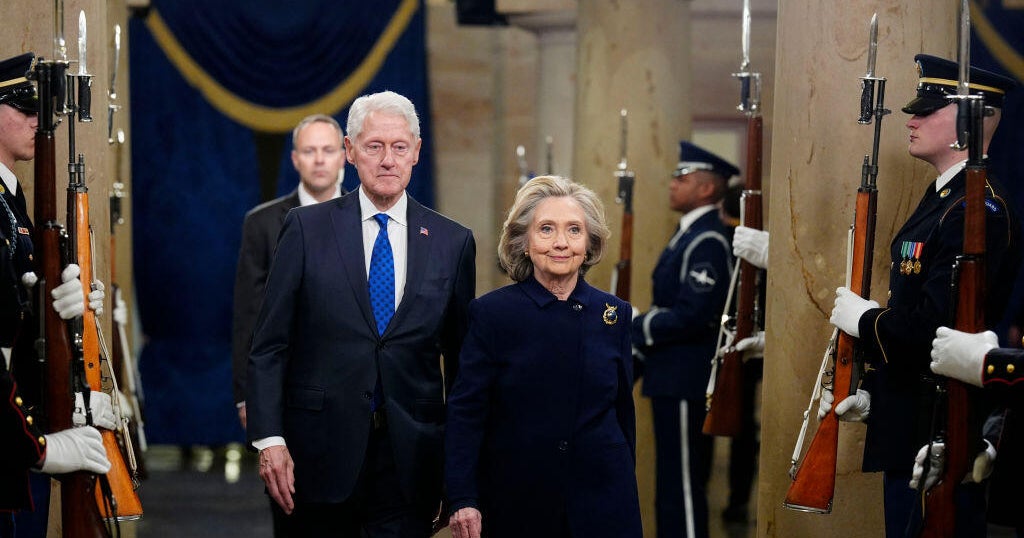
Former President Bill Clinton and former Secretary of State Hillary Clinton agreed to give transcribed, videotaped depositions to the House Oversight Committee in the congressional investigation of Jeffrey Epstein, after a looming contempt-of-Congress vote. The move pauses planned contempt actions and follows months of negotiation and earlier refusals by the Clintons to comply with subpoenas.
Key facts
Bill and Hillary Clinton agreed to testify in the House Epstein probe
Agreement followed threat/looming House contempt-of-Congress vote
Hillary to testify Feb. 26 and Bill on Feb. 27 before House Oversight
Neither Bill nor Hillary Clinton has been formally accused of wrongdoing in Epstein case
 AP News
 CBS News
Republican leaders frame the Clintons’ compelled testimony as necessary to fully investigate Epstein’s network, ensure transparency, and test Congress’s subpoena power over former officials.
Best arguments
Unrestricted, in‑person, filmed depositions are needed to understand the Clintons’ interactions with Epstein and Ghislaine Maxwell, including whether any protection or cover‑up occurred.
The Clintons resisted valid subpoenas for months, so moving toward contempt was the only effective way to secure their cooperation.
They present the inquiry as serving Epstein’s survivors and the public interest by exposing all elite connections, regardless of party, and potentially setting a precedent for future oversight of ex‑presidents.
AP NewsCBS NewsThe Clintons characterize the subpoenas as overbroad and politically driven, saying they have limited relevant knowledge and are complying mainly to avoid an escalating contempt fight.
Best arguments
They previously offered written or time‑limited, topic‑confined testimony, suggesting they viewed the committee’s broader demands as improper or a fishing expedition.
Neither of them has been accused of wrongdoing in the Epstein case and emphasize Bill Clinton’s denials of visiting Epstein’s island or engaging in illicit conduct.
They criticize Chairman Comer for focusing on them rather than on the Trump administration’s handling and release of Epstein‑related files, implying partisan motives behind the hearings.
AP NewsCBS NewsDemocratic voices and some critics contend Republicans are selectively targeting the Clintons while downplaying or ignoring Donald Trump’s ties to Epstein, though some Democrats still back enforcing subpoenas.
Best arguments
Comer is using the investigation to score partisan points against the Clintons.
Republicans have not equally emphasized Trump’s connections to Epstein, suggesting politicized oversight rather than a neutral fact‑finding effort.
Compelling a former president under these circumstances could set a precedent that will be used asymmetrically or escalates partisan investigations of ex‑officials.
Implying wrongdoing through repeated emphasis on associations alone: Coverage can suggest serious misconduct simply by repeatedly stressing a person’s ties to a disgraced figure, even when no specific evidence or charges are presented, blurring the line between association and proven culpability.
Framing negotiations as total victory or defeat rather than compromise: Describing complex legal or political negotiations in win‑lose terms can oversimplify events, obscuring mutual concessions and reinforcing a narrative of humiliation or domination rather than normal institutional bargaining.
Highlighting one side’s motives while understating the other’s: Narratives that deeply probe one group’s political or strategic motives but treat the other side’s explanations briefly or superficially can skew perceptions, making one camp’s actions seem more cynical or calculated by comparison.
Does anything look off?

Automated fact checks, context, and multiple viewpoints, so you can share more responsibly and argue less.

© 2025 Unbubble News. All rights reserved.
Made with care for a less polarized world.