Monday, February 2, 2026
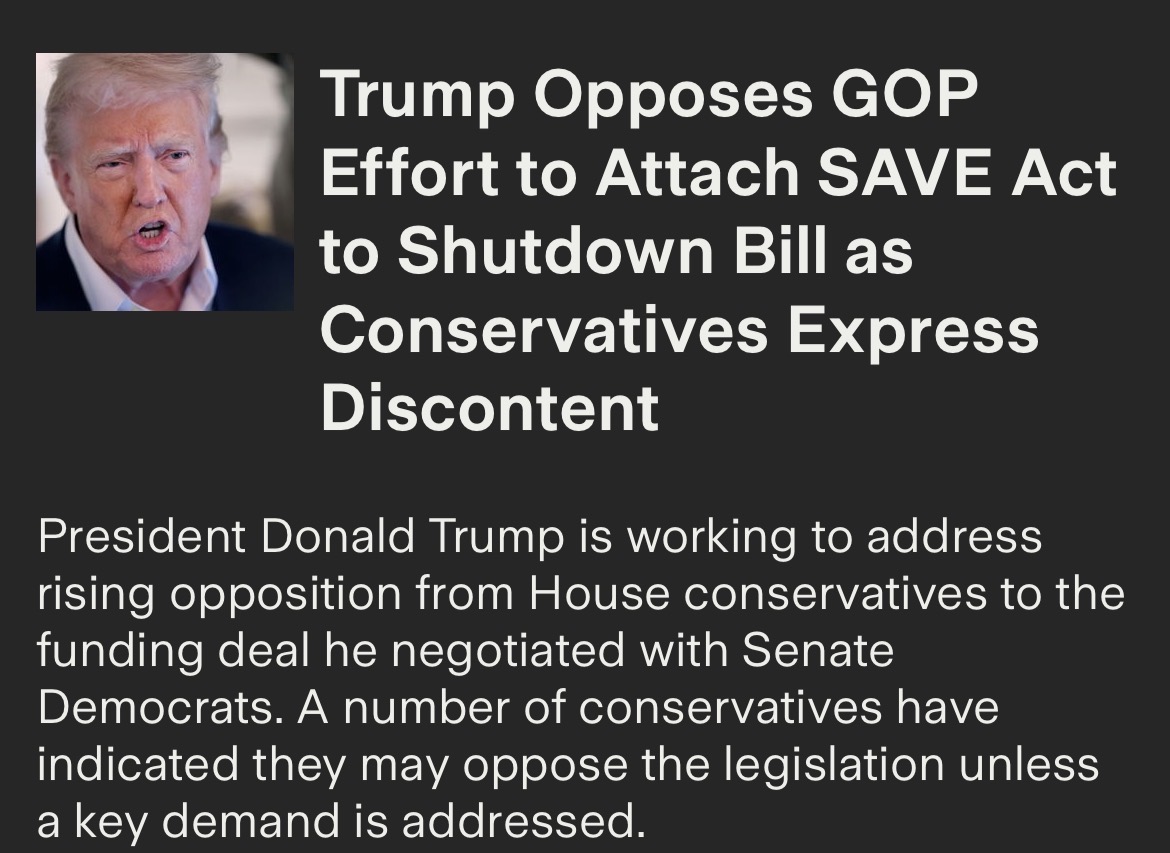
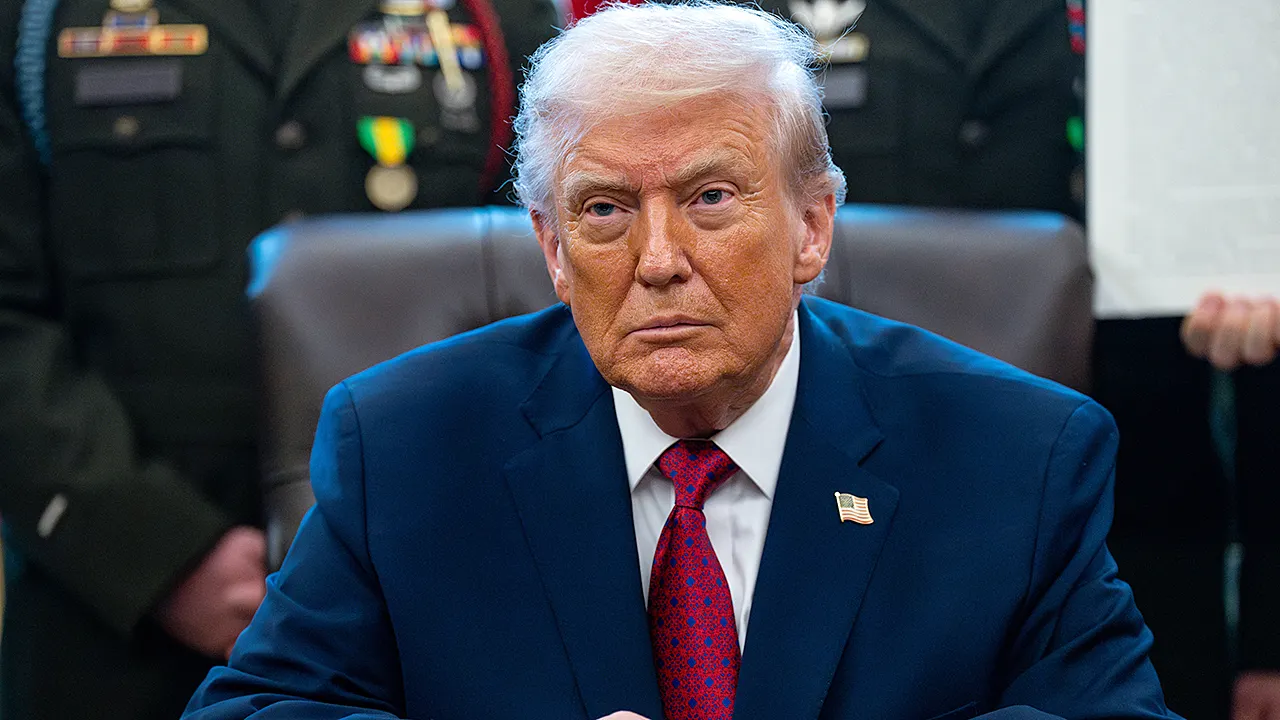
News reports describe President Trump urging House Republicans not to attach the SAVE Act (voter ID/registration changes) to a bipartisan funding package that the Senate passed, after a bipartisan Senate funding deal sought to avert a partial government shutdown. Some House conservatives pushed to add the SAVE Act, threatening to block the funding bill; Trump publicly urged no changes to the Senate deal to avoid prolonging a shutdown.
Key facts
Trump urged House GOP to pass Senate funding deal with “NO CHANGES”
Some House conservatives want the SAVE Act added to the funding bill
SAVE Act would require proof of citizenship/ID for voter registration
Senate-passed package funds most of government and extends DHS only briefly
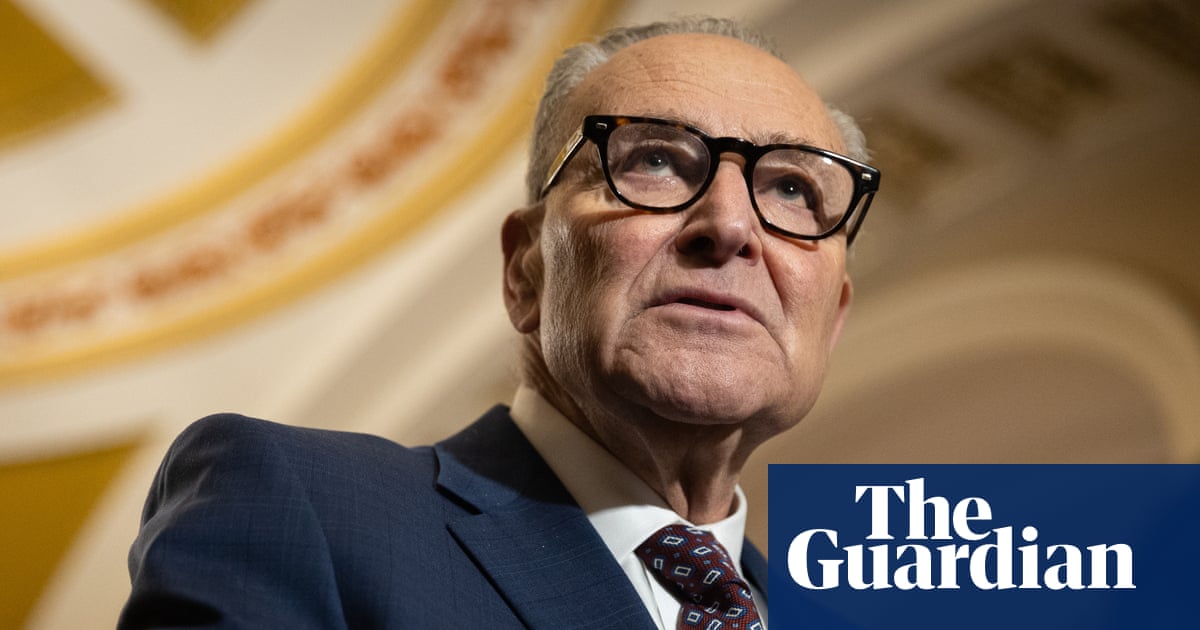
Democratic leaders say adding SAVE Act would kill the deal and prolong shutdown
 Fox News
They argue the House should pass the Senate funding bill exactly as written to end the shutdown quickly and negotiate other issues later.
Best arguments
Attaching the SAVE Act or other changes risks killing the bipartisan Senate deal and prolonging the shutdown.
A clean bill provides immediate funding stability for most of the government while allowing time-limited talks on DHS and immigration.
Republicans can pursue election-law priorities like the SAVE Act in separate, focused legislation rather than in a time-sensitive funding bill.
Fox NewsThey insist the funding bill should include the SAVE Act to crack down on perceived illegal voting, even if that complicates or delays funding talks.
Best arguments
They say requiring in‑person proof of citizenship is necessary to prevent non‑citizens from registering and voting in federal elections.
They argue that must‑pass funding bills are among the few leverage points to force action on conservative election priorities.
Some threaten to oppose or block the funding package unless the SAVE Act is included, believing GOP leaders are too willing to compromise.
 The GuardianFox News
They support the bipartisan funding deal but vehemently oppose adding the SAVE Act, framing it as voter suppression that would sabotage the agreement.
Best arguments
They describe the SAVE Act as a ‘poison pill’ that would kill the bipartisan package and risk a longer Trump-led shutdown.
They argue proof-of-citizenship voter laws echo Jim Crow-era tactics and would disproportionately disenfranchise minority and marginalized voters.
They want the focus to remain on reopening government and negotiating DHS and ICE reforms, not on GOP-backed election restrictions.
Stacking multiple negative facts to imply a single broad conclusion about actors: Reports sometimes cluster numerous controversies and critical details about the same figure or policy in one narrative, encouraging readers to infer broad misconduct patterns without explicitly proving them.
Treating a particular legislative outcome as inevitable rather than contingent choice: Coverage can portray adding or removing a policy provision as certain to cause shutdowns or failure, downplaying that such outcomes depend on negotiators’ strategic choices and possible compromises.
Using emotionally loaded labels to define a policy before evidence is examined: Debate over election or immigration rules is at times framed with charged terms like “suppression” or “security” without presenting clear data, nudging readers toward a value judgment before facts are weighed.
Describing routine intra‑party disagreements with language of rebellion or crisis: Ordinary bargaining and factional disputes within a party can be depicted as “mutiny” or similar, overstating the severity of conflict and implying systemic collapse where there is normal political friction.
Relying on extreme or tragic anecdotes to stand in for broader policy effects: Individual dramatic incidents, such as wrongful deaths or high-profile detentions, may be highlighted as emblematic of an entire system, without clarifying how typical they are or providing comparative data.
Does anything look off?

Automated fact checks, context, and multiple viewpoints, so you can share more responsibly and argue less.

© 2025 Unbubble News. All rights reserved.
Made with care for a less polarized world.